
Seamless access to traditional cultural experiences and a variety of outdoor activities beyond the typical Japan’s over-touristed urban centers

Heartland Japan, which provides adventure travel services to the Japanese countryside for intellectually curious international travelers, has launched a new booking website for customers, “Heartland Japan (https://heartlandjapan.com/)”, where users can directly book extensive trips to rural areas of Japan. With the launch of this website, independent travelers worldwide will be able to discover and book authentic, experiential travel that cannot be found in guidebooks or at major online travel agencies (OTAs). These trips transcend the well-known urban areas of Japan and venture into the lesser-known regional spots.

Background:

The “Golden Route” of Japan, covering Tokyo, Kyoto, Osaka, and Hiroshima, is a popular destination for international travelers and is truly wonderful. However, beautiful landscapes and authentic culture passed down through generations thrive in the rural areas just outside these cities. Until recently, travel to these areas has been impaired by difficulties in accessing information, complex booking processes, and language barriers, creating a psychological hurdle for foreign tourists. Heartland Japan seeks to remove this barrier. The website allows users to intuitively find a wide variety of tours tailored to their preferences, from short experiences to long-term cross-country tours, and make inquiries and reservations directly on the site.

Maximizing travel value: Contributing to the preservation of traditional culture and sustainable tourism.

This website offers more than just a tour. It offers experiences that combine thrilling adventures, which utilize each region’s rich natural resources with warm interactions with the locals, creating a completely new way of traveling. Travelers engaging deeply with nature and traditional performing arts, crafts, and cuisine directly contributes to the protection of local natural resources, the preservation of culture, and the local economy. Heartland Japan seeks to share with the world these sustainable and inspiring stories of how travel can connect Japan’s beautiful rural landscapes and the communities of its inhabitants to the future.

Examples of special “travel stories” that can be found at Heartland Japan

The new website allows users to directly book uniquely developed programs that transcend simple sightseeing, enabling travelers to become deeply involved in tackling local issues and preserving local culture.

Example 1: Traveling the Iseji route, a sacred prayer path of the Kumano Kodo World Heritage Site (Kii Peninsula, Mie Prefecture)
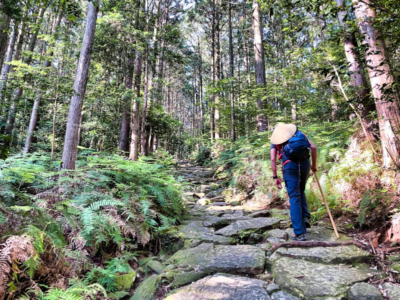
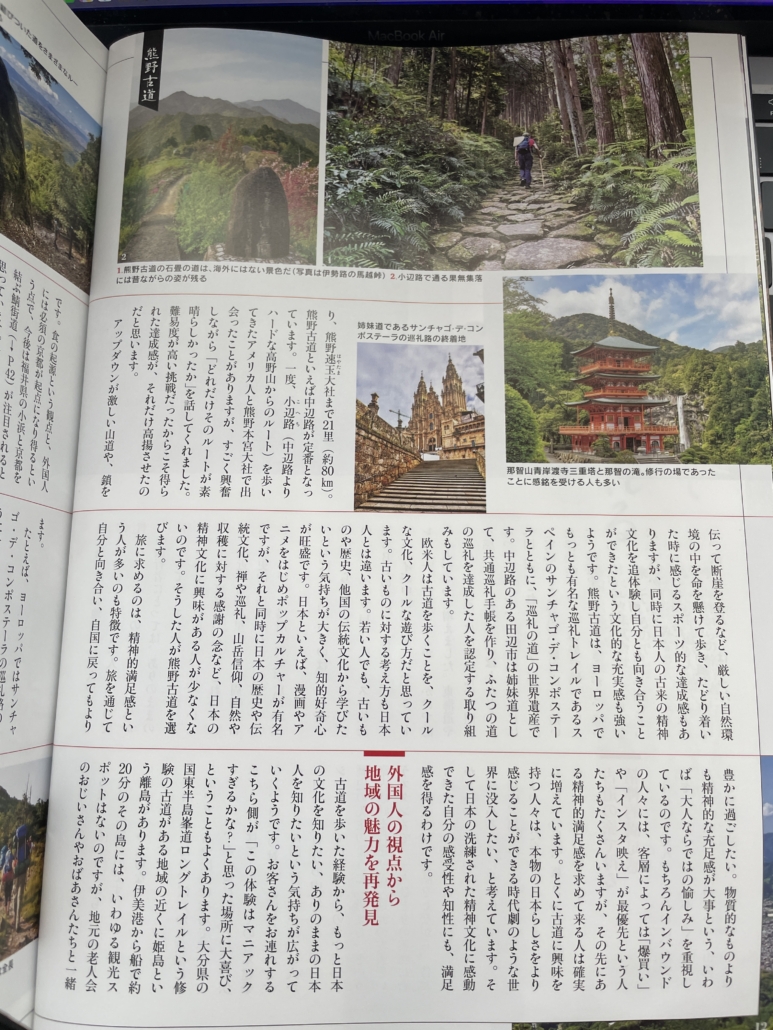
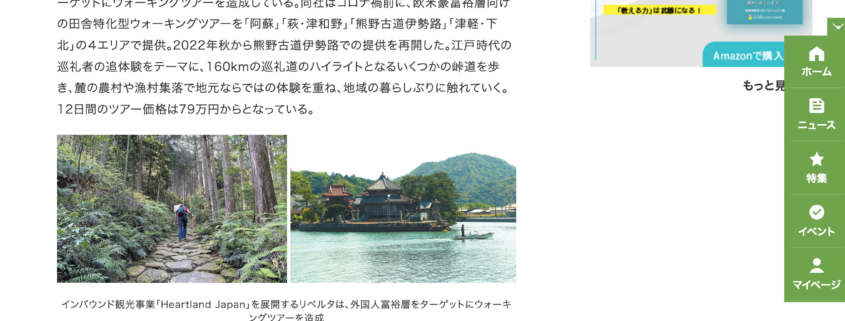
Kumano Kodo, a World Heritage Site, is very popular with hikers from Europe and America. This is a fulfilling hiking experience walking along the Iseji route, a sacred pilgrimage path that is not yet widely known to the outside world, accompanied by a local storyteller. Guests can enjoy the dramatic scenery with all five senses, created by the interplay of mountains and sea, such as the magnificent Kumano Sea that unfolds beyond the beautiful moss-covered stone paths, while staying in the depopulated post towns and fishing villages along the route.


Example 2: Learning about the restoration of traditional architecture and sustainable living (Matsue City, Shimane Prefecture)
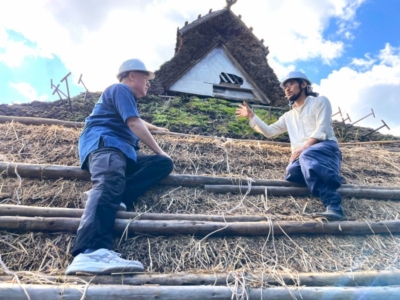
This is a workshop for the renovation of traditional Japanese houses(kominka) with over 120 years of history. Travelers will not merely be visiting, but “active co-creater” in the renovation, experiencing firsthand the restoration of thatched roofs and mud walls under the guidance of skilled local carpenters and plasterers. Holding the tools of the craftsmen, participants will learn about the sustainable wisdom of the Japanese people who have repaired and lived in their homes for generations, while directly contributing to solving the problem of vacant houses in the region and revitalizing the community. It is a deep and memorable experience.


Commenting on the launch of the website, CEO Keijiro Sawano stated, “We have opened the door to the remote areas of Japan that were previously difficult for international travelers to visit. Tourists can now book activity-packed experiences that enrich their lives without stress, while directly contributing to the preservation of endangered rural traditions and natural environments of Japan. As a pioneer in adventure travel in the country, we offer a wide variety of unique and special experiences. We hope that through your travels in Japan, you will connect deeply with local people and find your own’s spiritual home.”
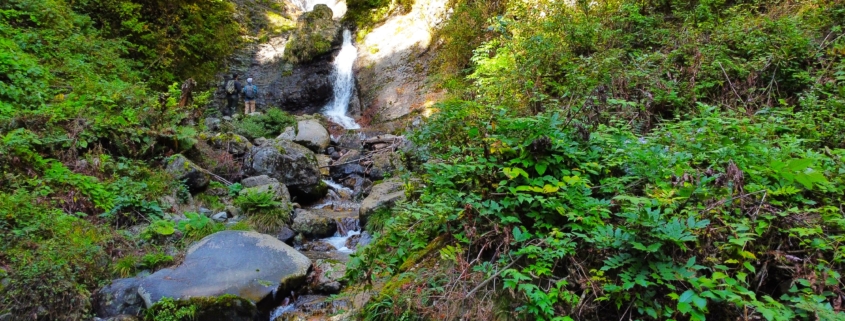
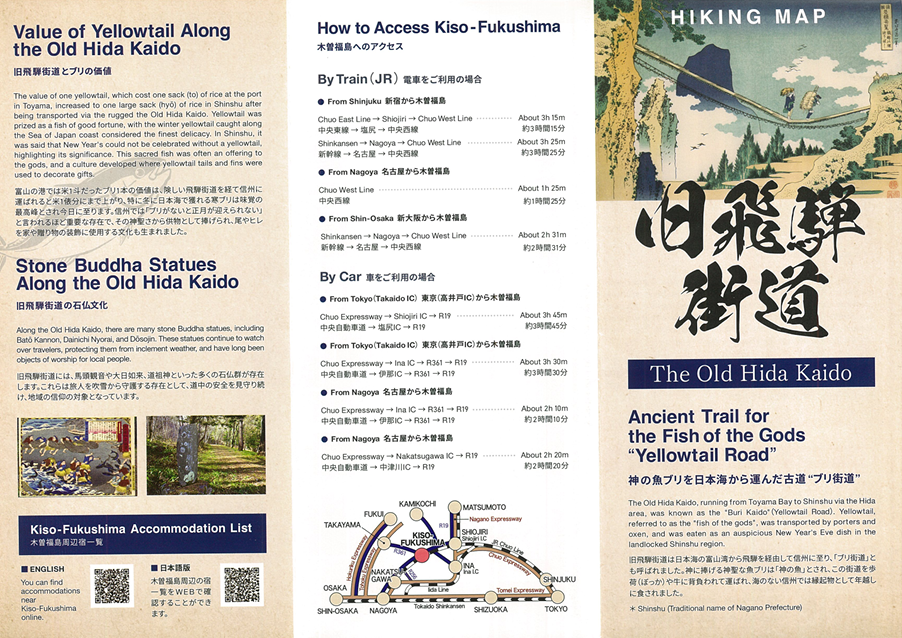
This project, which started in the fall of 2024, focuses on specific areas along the Nakasendo for overseas hikers.

Currently, the influx of visitors is increasing, causing a shortage of accommodations in the surrounding areas.

The same situation is occurring in Kiso Town, Nagano Prefecture, along the Nakasendo, particularly along the popular routes connecting the post towns of Magome-Tsumago and Yabuhara-Narai. Accommodations along these routes and in nearby areas are fully booked.

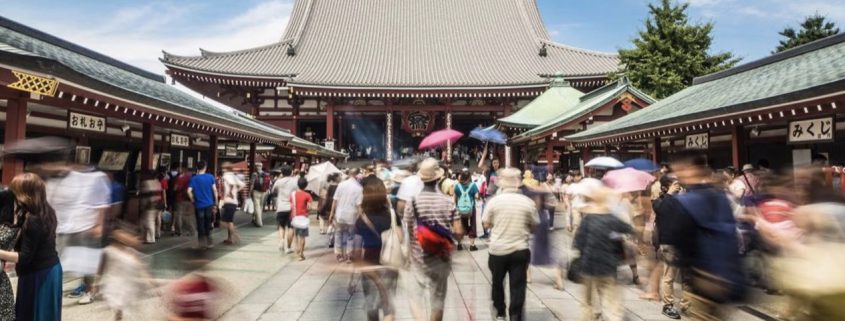
Whether due to skewed information or a reluctance to take risks when traveling to Japan, overseas visitors tend to flock to well-known places and those listed in guidebooks, leading to an overconcentration of tourists in specific locations.

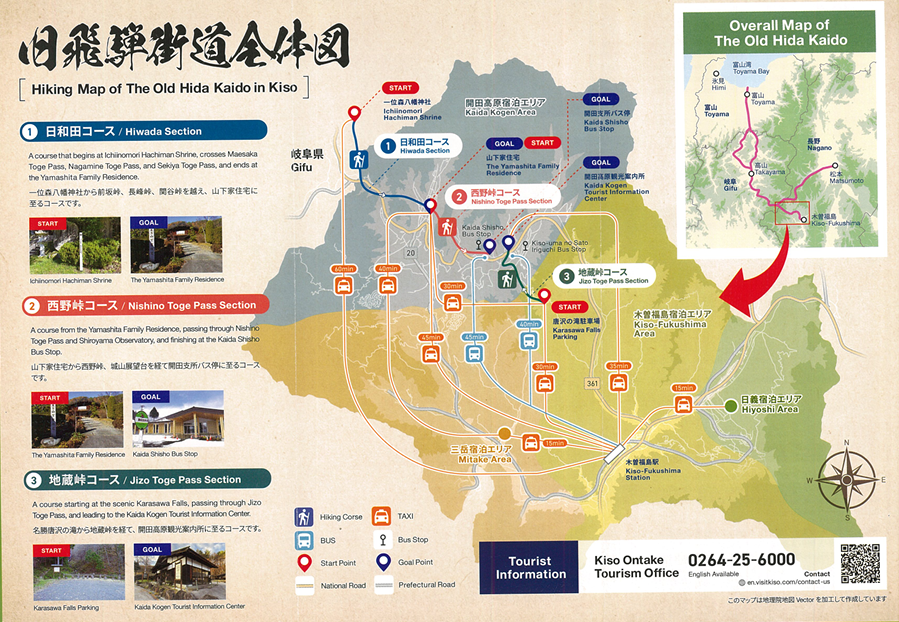
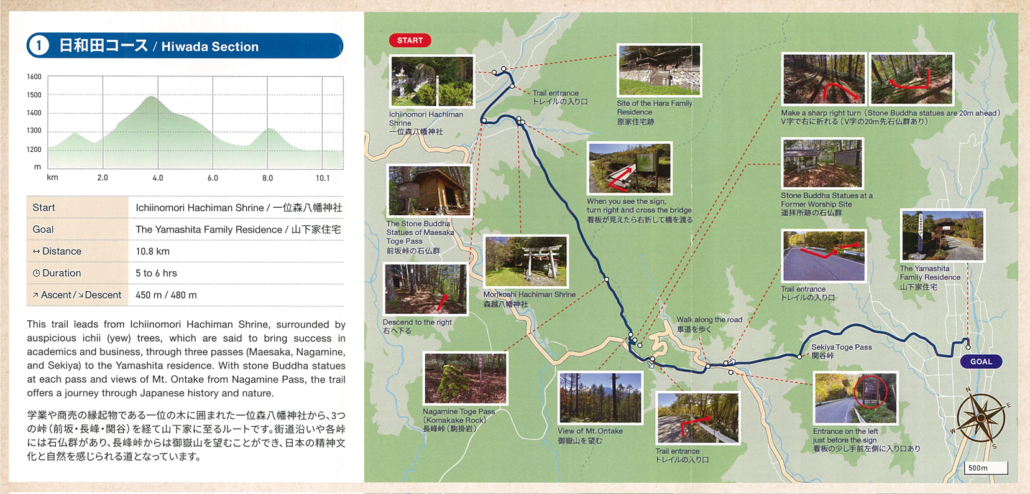
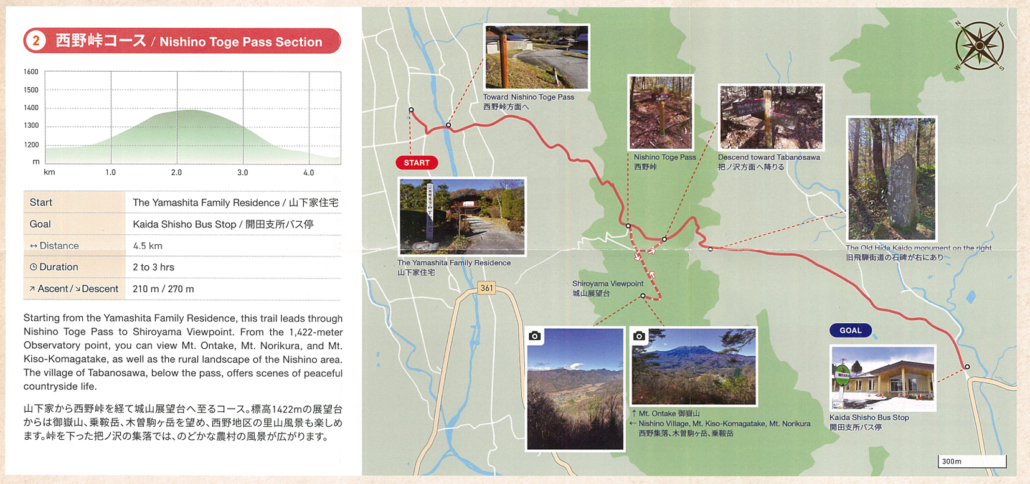
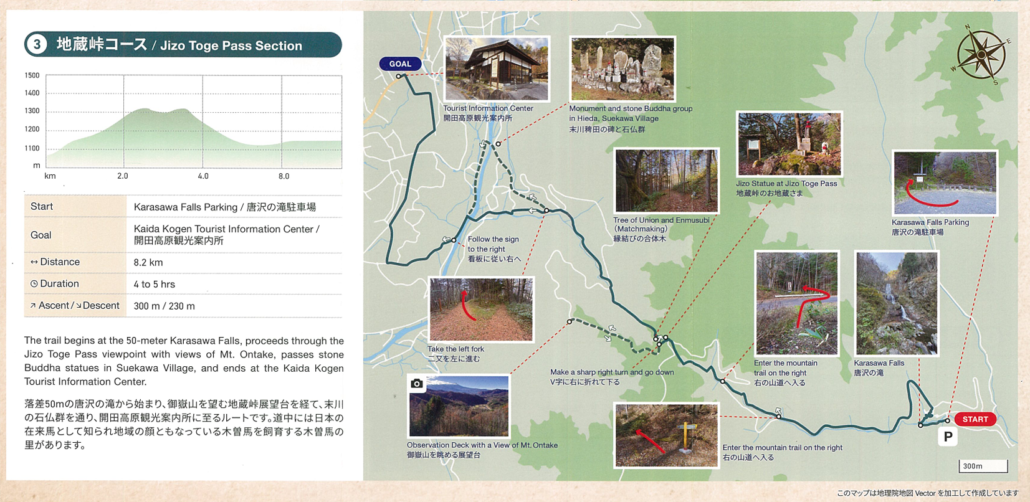
The Old Hida Kaido project was commissioned by Kiso Town, with the goal of increasing recognition of the Old Hida Kaido, alleviating the over-tourism concentrated in certain areas, and promoting the utilization of potential resources along the historic trail to help distribute visitors more evenly.

Our company has been involved in the following efforts:
・On-site surveys of the Old Hida Kaido
・Video production
・Map creation
・Article writing
・Website development
・Webinars for overseas agents

What makes the Old Hida Kaido unique is its alternate name, “Buri Kaido,” referring to the historical transport of yellowtail fish (buri) from the Himi area in Toyama Bay along the Old Hida Kaido to the Hida region and Shinshu for distribution. The yellowtail was considered a “sacred fish” in Shinshu, often offered as a New Year’s ritual.

We aim to continue leveraging this historically significant route as a foundation for regional revitalization and promoting it globally.

As part of our travel division, we will also offer this route as a new hiking experience, an alternative to the Nakasendo

We will continue to focus on creating multilingual brochures, maps, websites, videos, and system development, so please stay tuned for more updates.

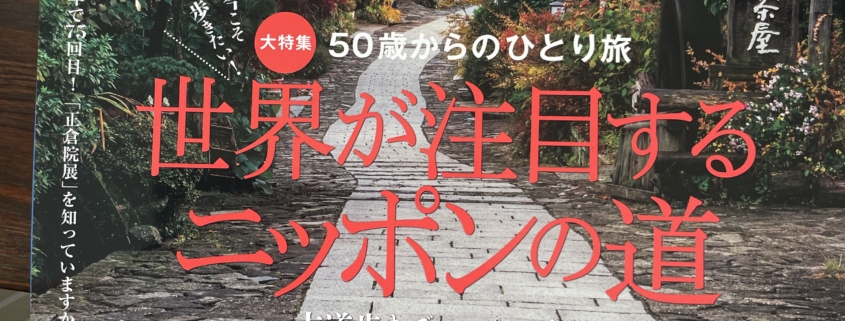
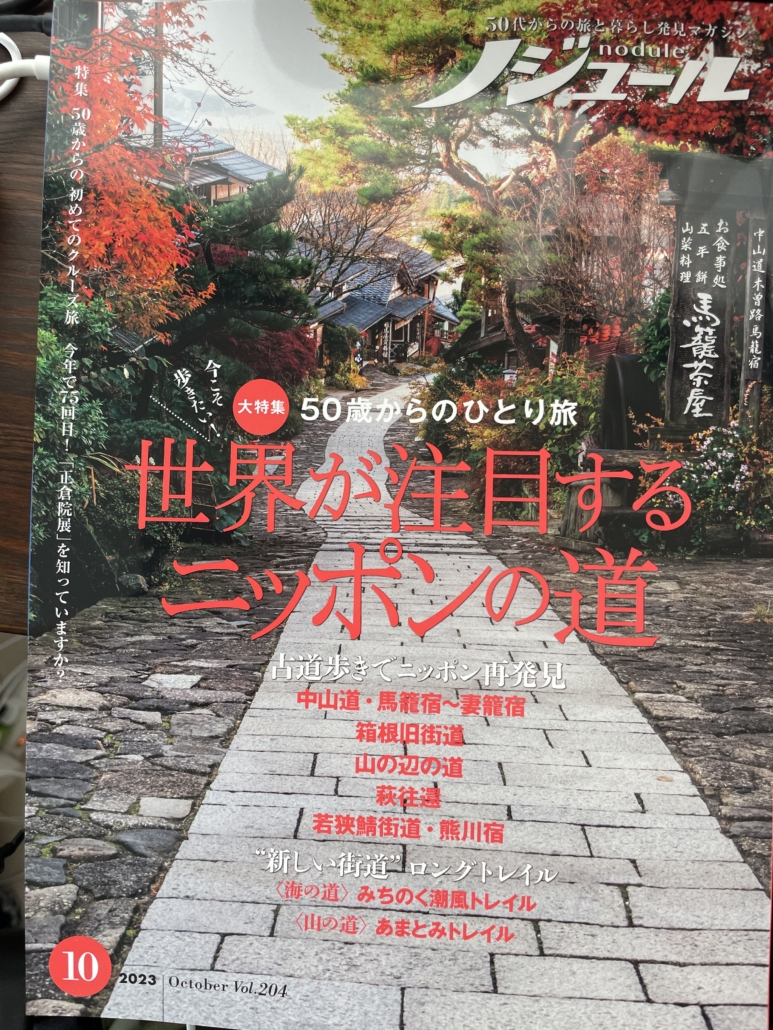
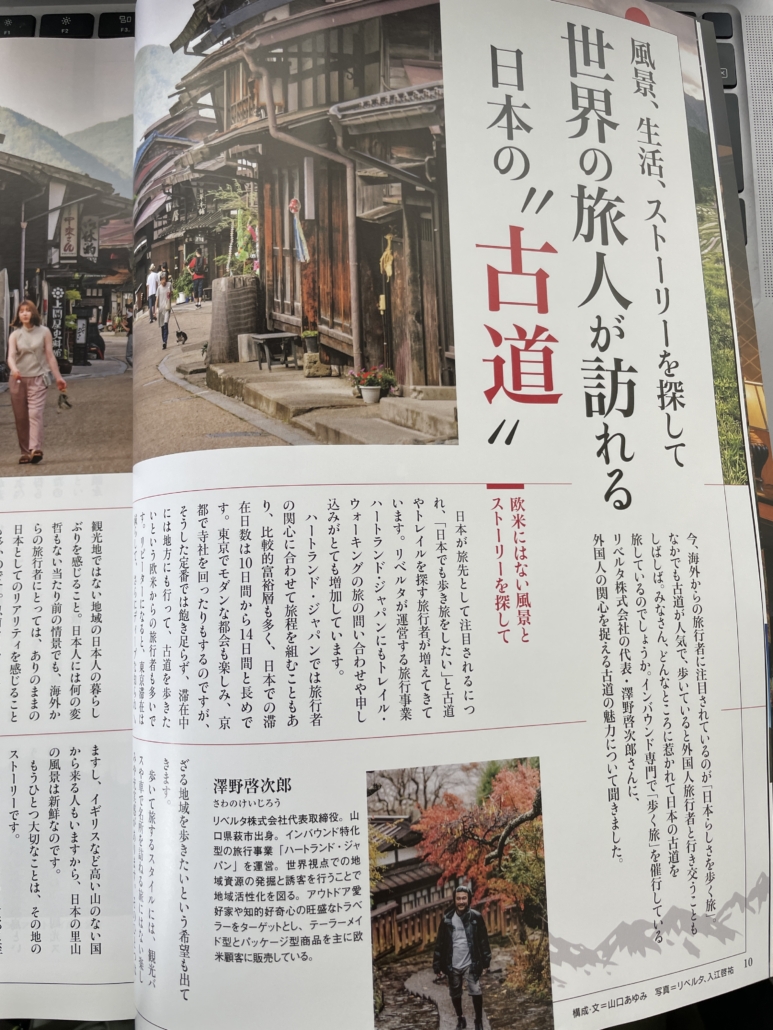
Keijiro Sawano, CEO of Heartland Japan (Liberta Inc.), assisted in the planning of a major feature in the subscription magazine “Nodule” (JTB Publishing) has published as an interview.

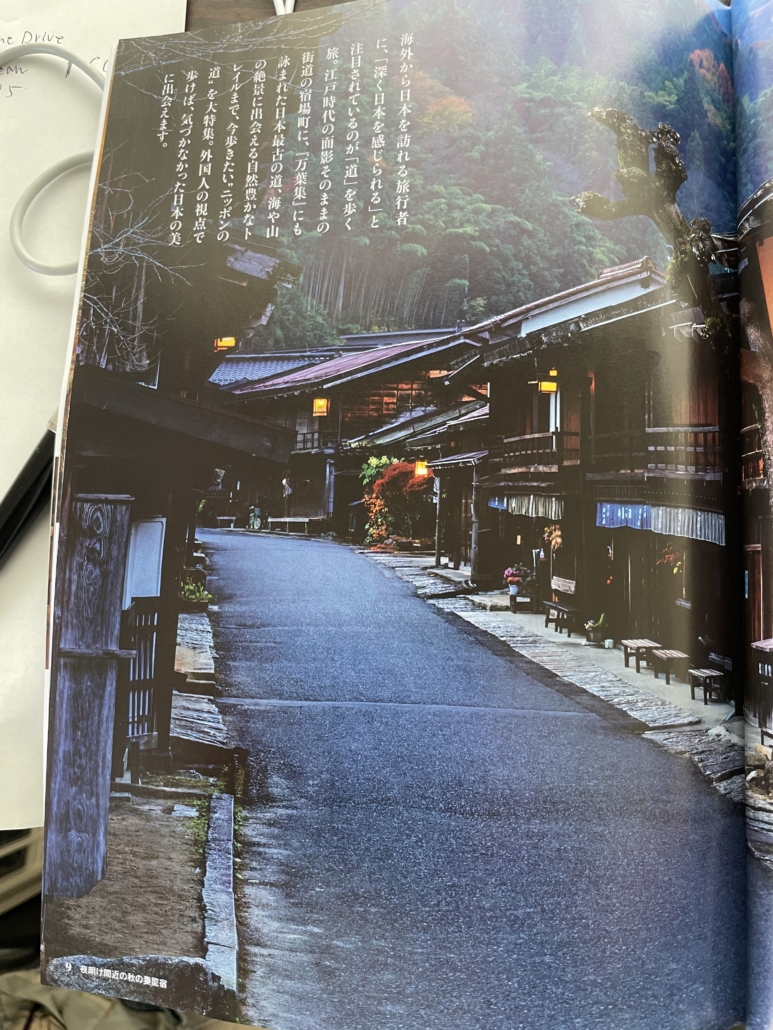
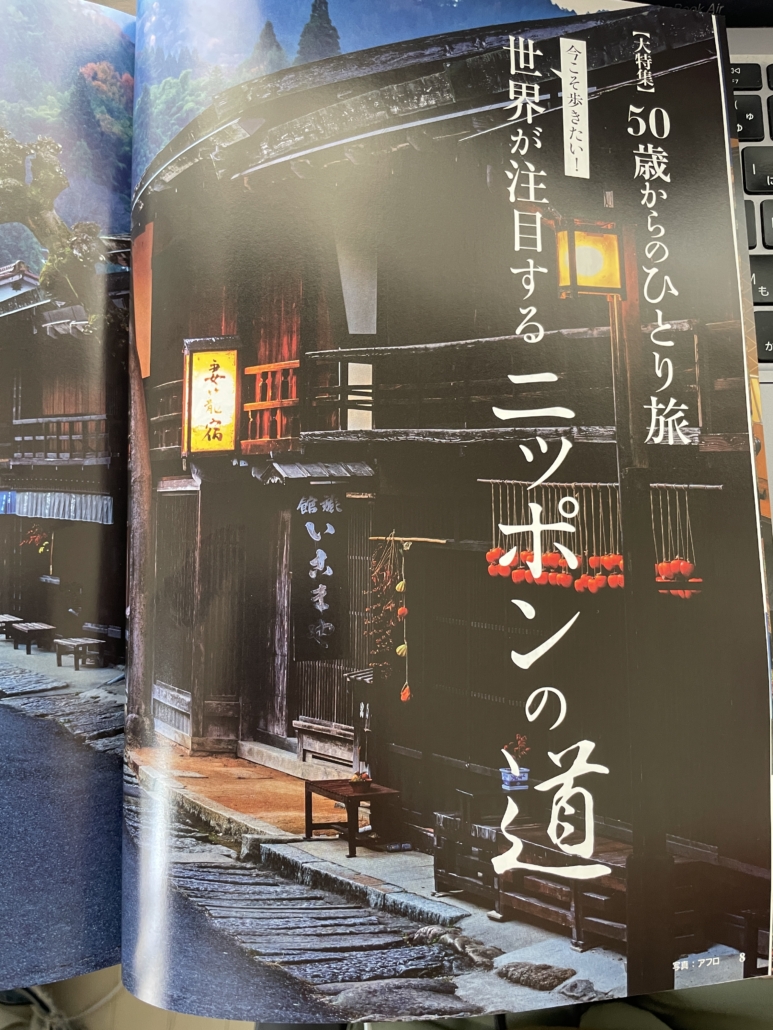
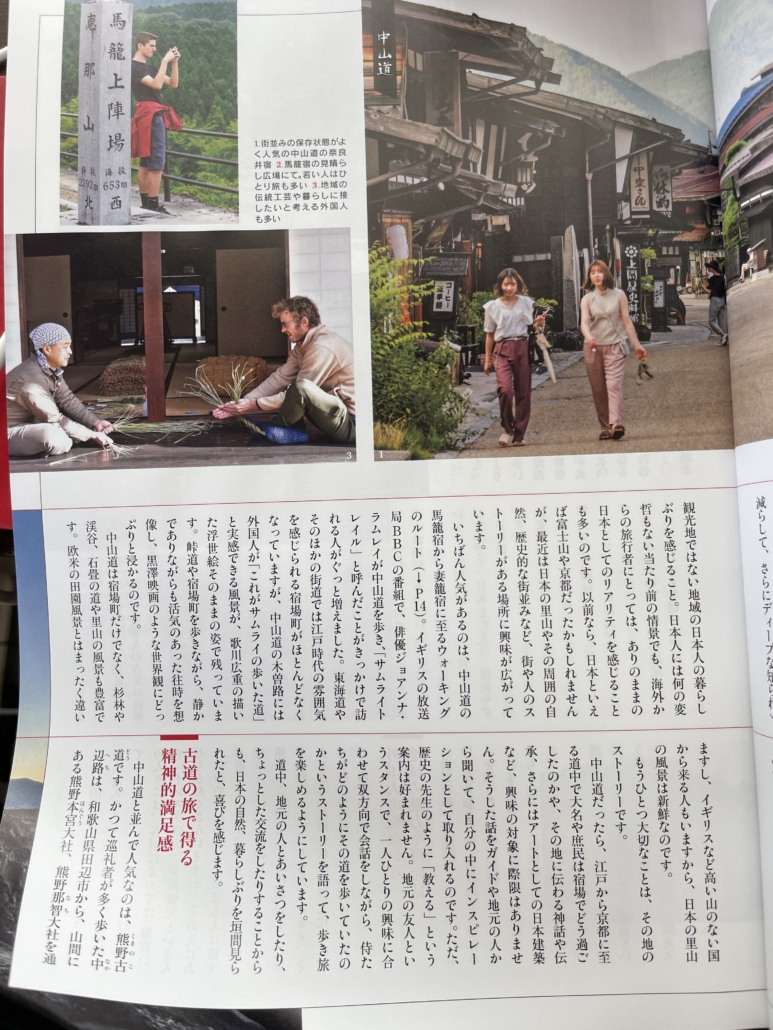
The theme of the feature was “Japan’s ancient roads that are attracting the world’s attention”.

He was asked to convey the appeal of Japan’s ancient highways from a foreigner’s point of view.

This is exactly what we at Heartland Japan do on a daily basis. It was a great pleasure for all of us at Heartland Japan to be able to present this concept as it is in the feature article.

The 62-page feature includes a 4-page interview with Keijiro Sawano.

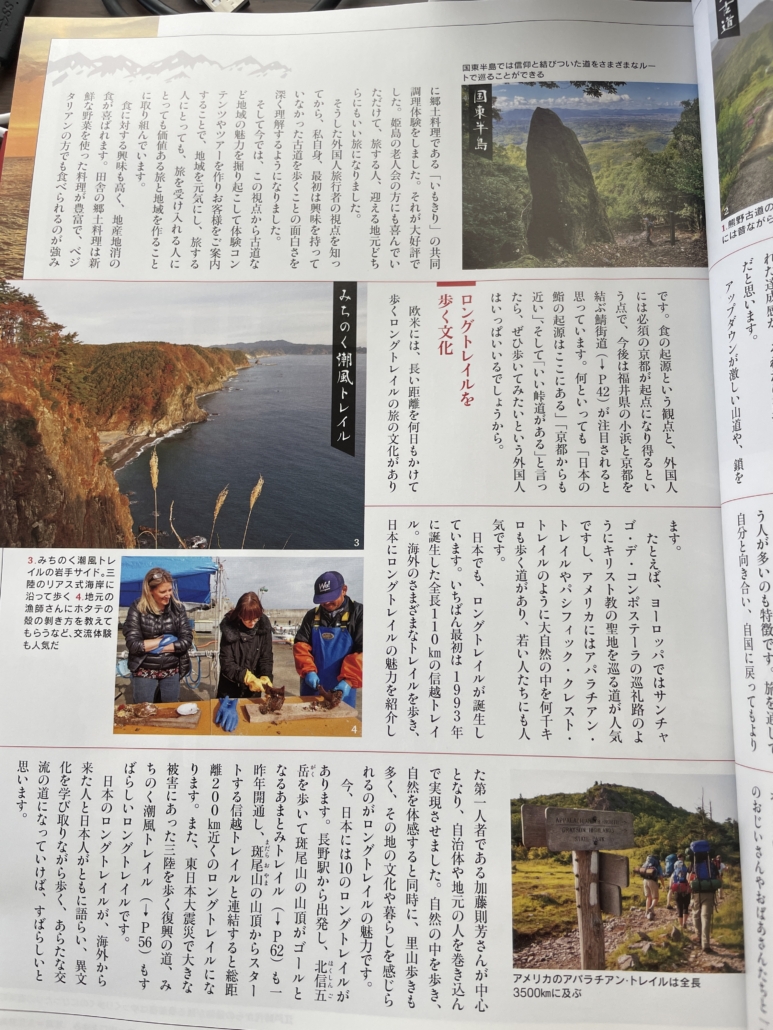
The magazine features the Nakasendo, Tokaido, Kumano Kodo Iseji, Michinoku Coastal Trail, Saba Kaido, Kunisaki Hanto Minemichi Long Trail, and even the Hagi Okan.

We are very happy to see that our friends and guides, who are always a great help to us at Heartland Japan were featured in the magazine, and we were able to feel the joy of connecting people with each other through the ancient roads. We are truly happy.

We hope that more of us and the younger generation will walk along these “ancient roads” as a cool cultural experience.
For our Western clients, walking is a cool culture.
We believe that if we can reimport these values, Japanese people will pay more attention to the local resource of ancient roads, and pay more attention to their preservation and inheritance.
This is our unique approach to regional revitalization from a global perspective.

We will continue to work on regional revitalization from a global perspective utilizing ancient roads!
Let’s walk together!

Information

■ “Nodule” (JTB Publishing)
https://www.nodule.jp/

■ Brand of our inbound business (Tokyo Governor Registered Travel Agency No. 2-7699)

Regional Development Department Site (English)
https://heartlandjapan.com/

■ Liberta inc.(English)
https://liberta-inc.com/en/

Noriko Oshima is a travel consultant of Heartland Japan.

She is currently appointed as “Hagi Komachi” (Hagi City Tourism PR Lady) by the Hagi Tourism Association.

The term of office is for two years. She is making efforts to revitalize her hometown in Yamaguchi Prefecture and Hagi City.

In the program “Japan’s Strongest Castle Special” (broadcast on June 26, 2023) on NHK (Japan Broadcasting Corporation) a state-run broadcasting station, Oshima introduced Hagi Castle as Hagi Komachi.

Furthermore, in an online poll by the program’s viewers, Oshima’s introduction of “Hagi Castle Ruins and Hagi Castle Town” was voted No. 1 in an online poll of the program’s viewers.

From among some 30,000 castles in Japan, three were selected for the program,

The viewers of the program chose “Hagi Castle Ruins & Hagi Castle Town” from among them.

Oshima is very happy to have been able to contribute to the local community.

Our company, Liberta (the management company of Heartland Japan) will continue to be of service to the local community in the future.

Please watch over us.

Our company’s ongoing efforts to attract inbound visitors to rural areas were featured in “事業構想”(PROJECT DESIGN) magazine. The article introduces one of our main products the “Kumano Kodo Iseji” walking tour from the angle of sports tourism.

Since the opening of Japan to the outside world last year, demand has been increasing at a tremendous pace, and inquiries from overseas have been exploding. It was reported (as of July 4, 2023) that the number of inbound visitors has recovered to 70% of the pre-Corona level, so we expect the number to continue to increase.

Japan’s inbound tourism industry has been promoting temples and shrines, pop culture, Japanese food, etc., but the utilization of natural resources and ancient roads is still untapped.

If Japan’s natural resources and ancient roads can be utilized more effectively to attract inbound tourists, the regions will be able to benefit more from them. This is because Japan’s natural resources are located in the countryside.

Japan has its own spiritual culture. It has a history. There is a way of life that has remained unchanged since ancient times.

We sincerely hope that local resources will be reevaluated and utilized from such perspectives.

As part of a new company initiative, a simple children’s corner has been built within our office.

As we now have three mothers with young children (aged 1 – 3 years old) in the office, we wanted to try creating an environment where the children can accompany their mothers to work until they enter nursery school or kindergarten. 

Heartland JAPAN currently employs a mix of foreign, Japanese and overseas staff, but by also employing working mothers with young children, we are hoping to create an even more lively environment filled with mutual respect and understanding. 

June 25th, Liberta Inc. has completed translation work for an Chinese influencer marketing measures of large-scale commercial facility (shopping mall) in Tokyo. We are expanding the production and translation work of such multilingual content.

We can also handle Chinese (Simplified and Traditional), so please feel free to contact us.

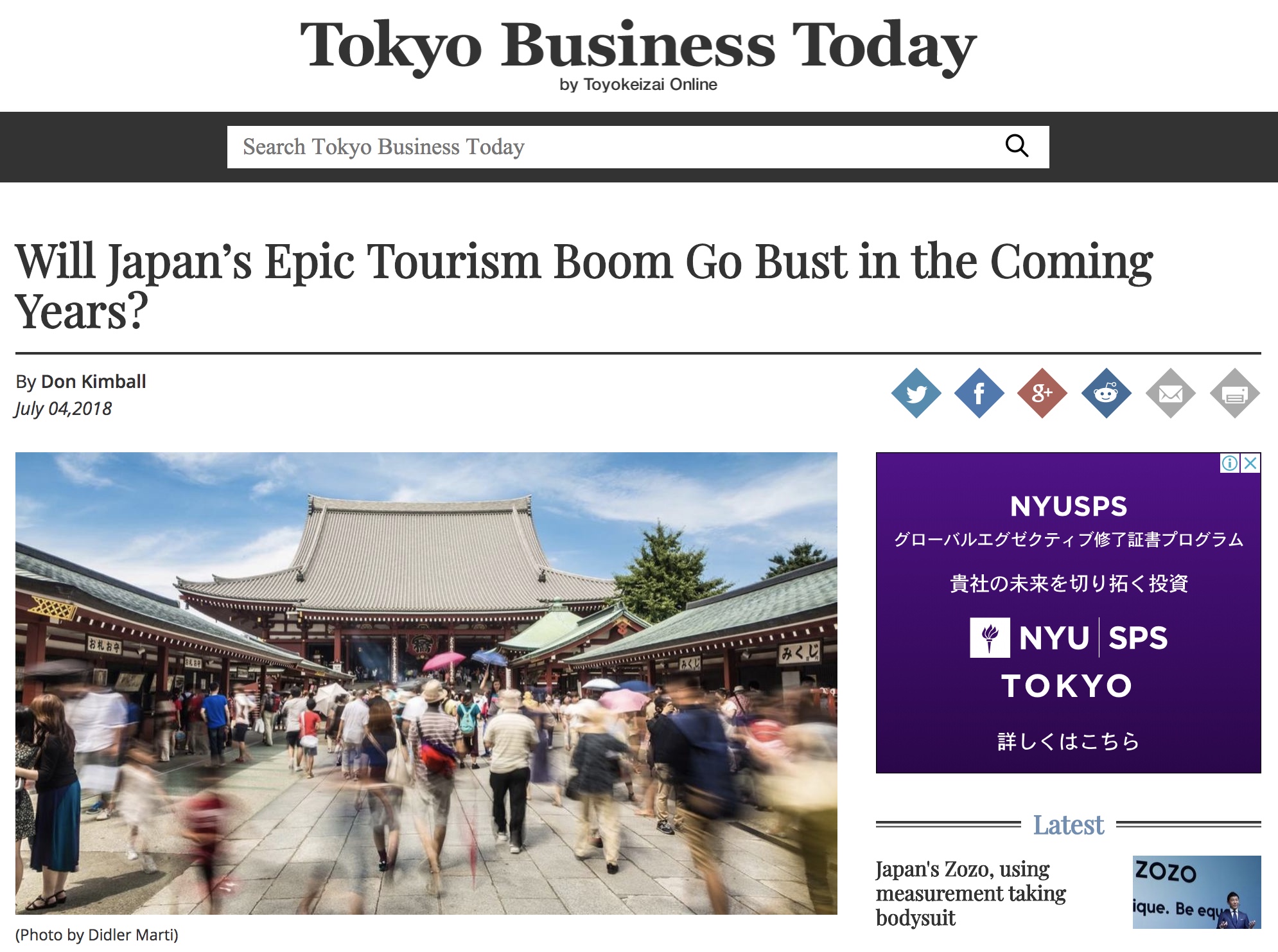
Heartland Japan was quoted in a July 4 2018 Tokyo Business Today article. The article explores the question of how long Japan’s tourism boom will last.


Japan has experienced an unprecedented inbound travel boom that has grown year on year since 2013. This is no doubt a very welcoming development for Japan but it has not been without its struggles as cities such as Tokyo and Kyoto tackle with the challenges that have arisen, particularly in terms of infrastructure, language as well as cultural differences.

The article suggests that Japan is still struggling with these issues and that the tourist-saturated cities’ burden need to be reduced by providing information and services to allow travellers to explore the rest of Japan, outside of the so-called ‘Golden Route’. This is where private travel companies such as Heartland Japan can play a key role.

Read the full article here.